
Running a Sex Offender Check in Pittsylvania County
The official starting point is the Virginia Sex Offender and Crimes Against Minors Registry, which the Virginia State Police manages under state law. It is the public source for current registry status across Pittsylvania County. Search by name when enough identifying facts are known. Use the place tools for family safety or neighborhood awareness. A city name by itself can miss a nearby rural address or return an address beyond town limits, so a Pittsylvania County filter and map view give better county-wide context.
The Pittsylvania County Sheriff's Office is the local law-enforcement contact. The county does not publish a separate offender list or detailed registration-counter schedule. Call the Sheriff's Office before visiting when a question involves local verification or suspected noncompliance. The state registry remains the public search layer, while the sheriff and VSP handle official compliance concerns. Neither a mapped point nor a name alone proves that someone is present at a place now.
Pittsylvania Name and Radius Searches
Name mode and location mode answer different questions. A name search can test a possible match when the reader already knows a legal name. First and last names may still produce more than one person. A location search works from an address, city, ZIP, county, or radius and is more useful for community awareness. Pittsylvania County covers a broad rural area, and conversational place names do not always match town or county lines.
For a possible name match, compare the image, aliases, age, physical description, offense jurisdiction, and verification date. For an area search, read the map and list together. Status labels matter too. An incarcerated, homeless, or civilly committed label changes how the address information should be read. These checks reduce the risk of attaching a Pittsylvania County registry profile to the wrong person or treating an old location as a live sighting.
Searching the Virginia Sex Offender and Crimes Against Minors Registry
The Virginia registry offers separate name and location modes with filters for Pittsylvania County. Use the narrowest facts that are known, but do not force a match when the details conflict. The search controls are public and free. They are meant to support safety and awareness, not to replace direct confirmation by law enforcement.
- Open the official Virginia registry and review its conditions and lawful-use notice.
- Choose name mode for a known person or location mode for an address, ZIP, or Pittsylvania County area.
- Apply the county, radius, map, and status filters that fit the question, then review the result list.
- Open a likely profile and compare the photograph, aliases, physical details, offense jurisdiction, tier, and last verification before drawing a conclusion.
| Field or Control | Type | Required | Use |
|---|---|---|---|
| Search by Name | Tab | No | Opens name-based mode. |
| Last Name / First Name | Text | Mode-dependent | Use known identifiers; a result is not identity proof. |
| Search by Location | Tab | No | Opens address and geographic controls. |
| Street, City, State, ZIP | Text / select | Mode-dependent | Town and ZIP results can cross local boundaries. |
| County | Dropdown | Optional | Select Pittsylvania for a county-wide search. |
| Radius and Map/List | Dropdown / toggle | Optional | Expands distance and changes the result view. |
| Status Filters | Filters | Optional | Includes incarcerated, homeless, or civilly committed categories. |
Clear the form before changing modes so an old name or location does not narrow the next Pittsylvania County search. Keep the result tied to the fields actually entered.
Avoid Pittsylvania Registry Name Errors
A shared name is only the start of verification. The registry profile provides several facts that should line up before anyone treats a result as the intended person. Compare a current photograph and physical marks with the available facts. Check aliases and age. Then read the offense jurisdiction and conviction details. A record tied to another part of Virginia or another state may still appear in Pittsylvania County because registration follows current status and address rules.
Address data also needs care. It reflects registry reporting, not a promise that a person is at that spot at a given moment. A stale-looking address should not prompt contact with the registrant or a household. Save the public profile details, note the update or verification date, and contact the Pittsylvania County Sheriff's Office or VSP. That approach lets the agency test compliance without spreading an unverified claim.
Note: A same-name Pittsylvania County result should remain unconfirmed until several public profile identifiers agree with known facts.
What a Registry Profile Shows
A public profile joins identity, status, and offense fields in one official view. Read each field in context. A photograph and aliases help with identity, while tier and offense data describe the legal basis for registration. Verification and update fields show when the registry last processed information. Public visibility does not make the profile a complete criminal case file, and it should never be republished as a local dossier.
| Name & Aliases | Legal display name and other names reported in the registry. |
|---|---|
| Photo & Description | Photograph, sex, race, age or date of birth, physical description, and scars, marks, or tattoos where shown. |
| Address or Status | Registration location or a status such as incarcerated, homeless, or civilly committed. |
| Offense Information | Offense description or statute, conviction date, and conviction jurisdiction. |
| Tier | Virginia's statutory category for the listed offense and circumstances. |
| Compliance Details | Registration or compliance status plus the most recent verification or update shown. |
| Other Authorized Fields | Vehicles and other public details may appear when Virginia law permits. |
A registry profile does not show every pleading, hearing, or final court order. Use the court clerk when the precise criminal case outcome matters.
NSOPW and Pittsylvania Registry Results
The National Sex Offender Public Website adds a federal cross-state search layer. It is useful when a person or address may connect to another state, but it does not replace Virginia's own registry. NSOPW draws from participating jurisdictions. VSP remains the direct source for a Virginia record, its displayed fields, and current Pittsylvania County status.
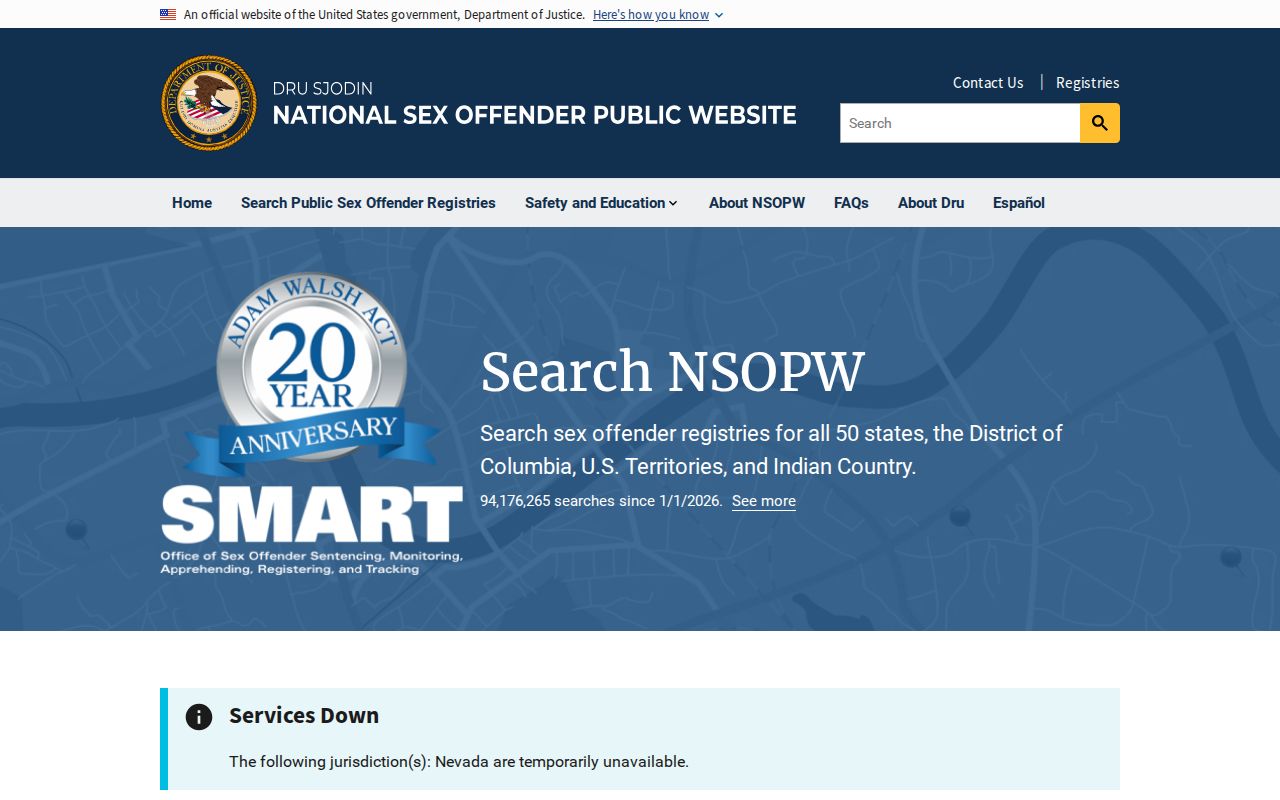
The national screen helps broaden a search, while the Virginia profile supplies the state-specific tier and verification context needed for a Pittsylvania County result. Run both when an address sits near a state line or the known history spans jurisdictions. If the two systems appear to disagree, check the Virginia profile first and ask VSP or local law enforcement to clarify status rather than choosing the result that seems more recent.
Registration Requirements and Levels in Virginia
Virginia Code places registrants in Tier I, Tier II, Tier III, and a separately tracked murder category. The summary periods below are orientation only. Exact duties can turn on the offense, repeat status, out-of-state equivalency, juvenile history, later court relief, and the version of the law in force. The full Sex Offender and Crimes Against Minors Registry Act controls each case.
| Virginia Category | General Duration | Visibility and Verification Context |
|---|---|---|
| Tier I | Generally 15 years | Public registry category; current offense and relief rules control re-registration. |
| Tier II | Generally 25 years | Public category for more serious or repeat offenses; current law sets verification duties. |
| Tier III | Generally lifetime | Public highest-tier category with frequent verification. |
| Murder | As Chapter 9 specifies | Separately tracked public statutory category with duties set by Chapter 9. |
Do not infer a person's remaining term from the tier label alone. Use the exact offense and current statute, then seek official guidance for an individual duty. Registration length and re-registration frequency are legal questions that a short public table cannot settle.
Report Pittsylvania Registry Concerns
A status or address that appears stale is a lead for the proper agency, not proof of a violation. Record the public profile URL, the displayed status, and the last verification date. Then call the Pittsylvania County Sheriff's Office at 434-432-7800 or use the reporting path shown by VSP. The county has not published exact registration-counter or appointment instructions, so calling first avoids an unnecessary trip to Chatham.
Explain the concern without confronting anyone. Law enforcement can compare the report with nonpublic compliance records and decide whether follow-up is needed. Call 911 only when there is an immediate threat. For an ordinary mismatch, the sheriff or VSP is the right channel. Do not post a profile, speculate about a household, or ask neighbors to investigate.
Pittsylvania Status Filters in Context
The Virginia interface distinguishes incarcerated, homeless, and civilly committed status. Those labels can explain why a mapped address does not read like a normal home address. They also keep a searcher from assuming that every listed point has the same meaning. Read the profile's status and last verification together.
The official Virginia registry law source shows the statutory framework behind those records and public duties.
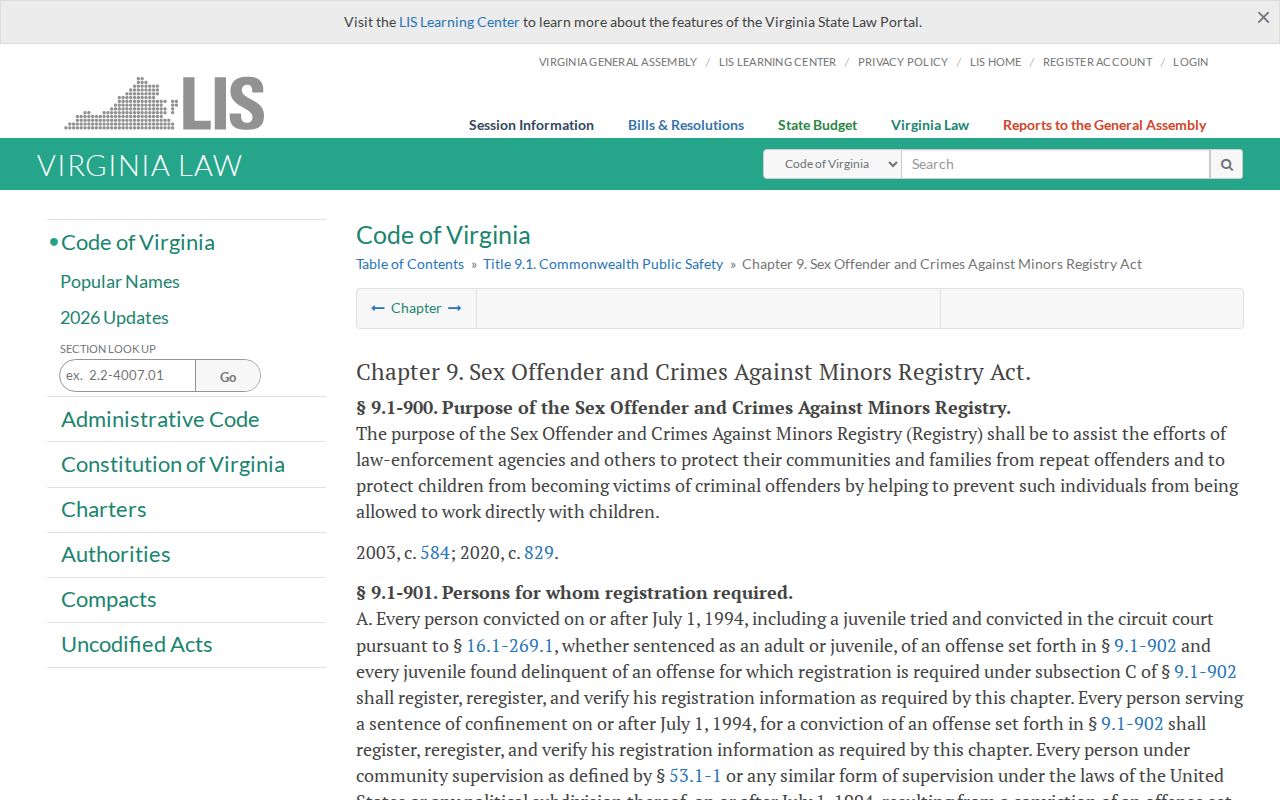
The statute view anchors the public screen to the legal rules that govern tiers, registration, and disclosure. It is the better source when a brief registry label seems unclear. Still, an apparent violation belongs with the sheriff or VSP, because a member of the public cannot see the full compliance file.
Lawful Use and Community Notification
The registry supports personal, family, and community safety. People may use it to understand a neighborhood, verify an apparent match, and pass a good-faith compliance concern to law enforcement. The public data is not an invitation to contact a registrant, threaten a family, organize harassment, or punish someone outside the law. Official notification and enforcement remain government functions.
Pittsylvania County residents should rely on the profile as published, keep the limits of address data in mind, and use the sheriff or VSP for questions. A careful search protects both community safety and accurate identification.
Misuse warning: Virginia's registry warns that using its information to intimidate or harass is a crime. Title 9.1, Chapter 9 governs registry access and enforcement.